How Project Management Tools Drive Faster Business Decisions

Alyssa Briones
30 March 2026 01:00 PM


Frustration remains when bottlenecks consistently spawn everywhere. Project management tools like Upprovall can help fix these to keep your work moving.
Sometimes making a decision at work feels impossible. You ask a question, and nobody answers. You wait for a report that never comes. Meetings drag on, and by the time a choice is made, the moment has passed.
Slow decision-making costs companies millions of revenue each year. It equates to lost opportunities and delayed product launches. It’s not due to a lack of effort. Most teams are working hard, but they lack clarity and organization.
Teams spend an average of 30% of their time tracking updates, following up on approvals, and finding scattered information across multiple applications. It calls for a system of having everything and everyone in one place. And this is through using a project management tool.
They aren’t magic, and they don’t make decisions for you, but they do make it obvious who’s doing what, what’s ready, and what’s stuck. When the clutter is cleared, decisions finally happen naturally and confidently.
Common Bottlenecks on Business Decisions
Ever wonder why some decisions at work take forever? It’s rarely about people slacking off. Most of the time, the bottlenecks are surprisingly simple, but they compound quickly. Here’s what usually trips teams up:
1. Information Everywhere is Nowhere
Updates, files, and progress reports are spread across emails, chat threads, and spreadsheets. Nobody knows where to look first, so people spend more time looking for the most updated version than deciding.
2. Unclear Ownership
If no one knows who’s responsible for a task or decision, everyone assumes someone else will take it. That pause can delay multiple projects at once.
3. Communication Overload
Adding more meetings to solve confusion usually backfires. Instead of speeding things up, it eats into the time that could be spent acting on the problems.
4. Conflicting Priorities
Without alignment, teams waste time debating about priorities. Energy goes into discussion rather than action, and decisions get pushed down the line.
5. Approval Delays
Even small decisions can get stuck in limbo if the right person isn’t available or doesn’t have the context they need. One delayed sign-off can ripple across projects.
All of these bottlenecks are fixable. Once you can centralize information, clarify responsibilities, streamline communication, and align priorities, making decisions becomes far less stressful.
How Project Management Tools Help
If decisions are slow, it’s usually because the process behind them is unclear. Using a project management tool doesn't solve everything overnight, but it removes a lot of the friction that affects teams down in the first place.

One of the biggest shifts is having everything in one place. Instead of jumping across multiple platforms, your team can see tasks, updates, and deadlines in a single view. That alone saves time. You’re no longer piecing together information; you’re reacting to what’s already visible.
It also changes how responsibility works. When ownership is clearly assigned, decisions don’t hang in the air waiting for someone to claim them. The right people have the context they need, and they can act without second-guessing whether it’s their place to do so.
Another major difference is how quickly teams can respond. With real-time updates, you don’t have to wait for meetings or reports to know what’s going on. Conversations stay tied to specific tasks. If something’s delayed or off track, you see it early and adjust right away.
Project management tools don’t speed things up by forcing urgency. It removes confusion, because once it’s out of the way, decisions tend to take care of themselves.
How to Integrate It in Your Workflow
To successfully adopt a new tool into your workflow, keep it simple. You don’t need to map out every process on day one. Pick one active project or one team, and start there. Let people get used to updating tasks, checking progress, and relying on the tool before expanding it across everything else.
One thing that helps right away is setting a simple rule: if it’s not in the tool, it doesn’t exist. That might sound strict, but it quickly builds the habit of keeping tasks, updates, and decisions in one place. Don’t let the tool become just another place to check. Make it the main place. Encourage your team to use this for dropping all necessary and project-related information.
You’ll also want to avoid overloading the system. Too many features, tags, or processes can turn people off quickly. Focus on what your team actually needs to move faster: clear task delegations, deadlines, and visible progress. That’s usually enough.
If you’re looking for something built with this kind of workflow in mind, Upprovall is a simple yet powerful project management platform fit for this. It covers the basic necessities most teams need to create a seamless and effective system for handling multiple projects. You may explore more of its features here.
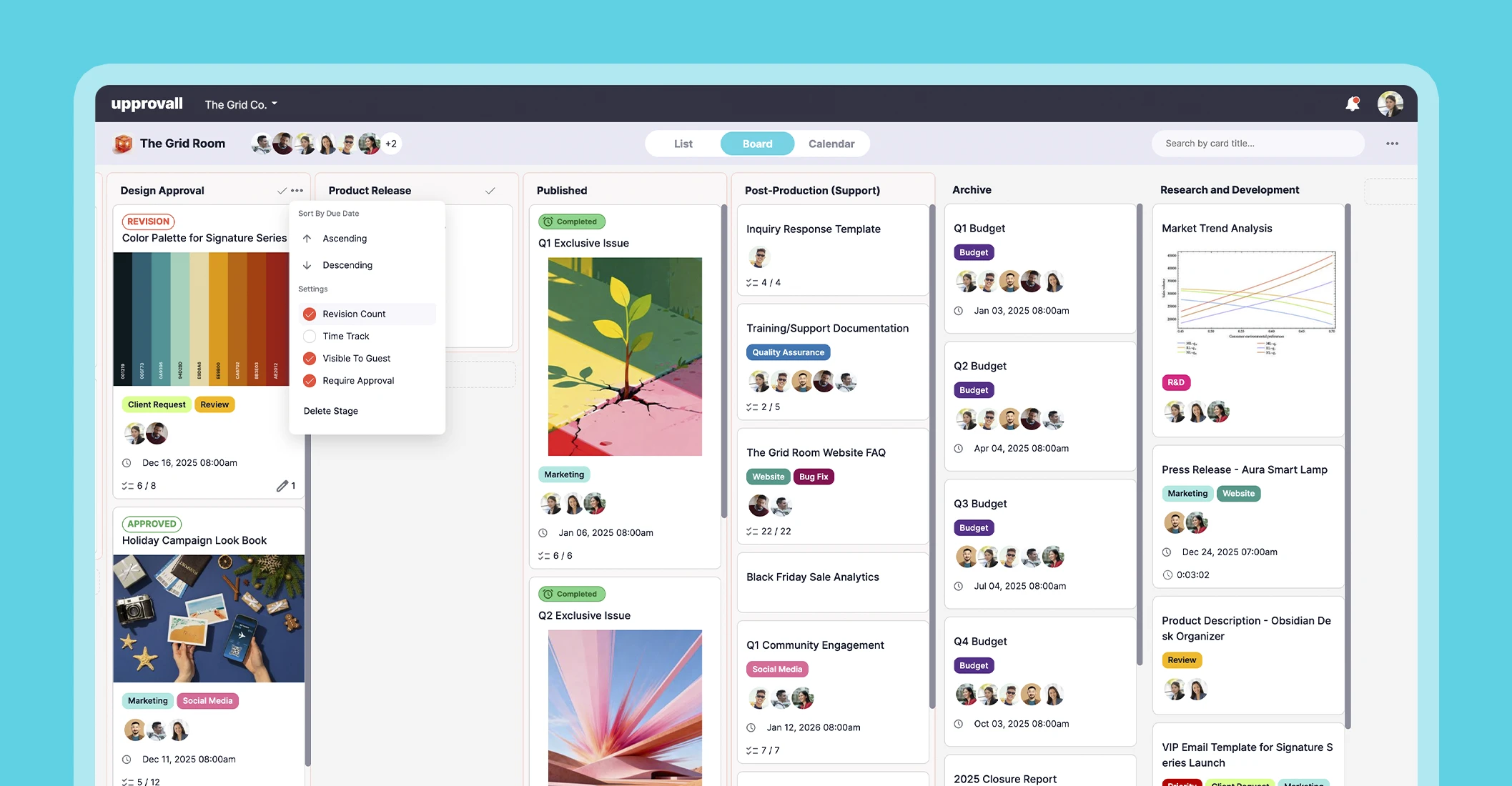
It’s also free! Forever. Sign up for an account today!
Conclusion
When you can’t see what’s going on, everything takes longer than it should. Once that’s fixed, a lot of the delays just disappear on their own. You don’t need a perfect system either. Just something clear enough that people know what’s happening and what they need to do next. That alone can shift your team’s efficiency.